OFFICIAL Written by GPN · Nov 9, 2026, 3:39 AM ET · NVIDIA · Tech
NVIDIA has set out how Korean industry leaders are moving physical AI out of development and into real production, spanning semiconductor engineering, autonomous driving and factory robotics.
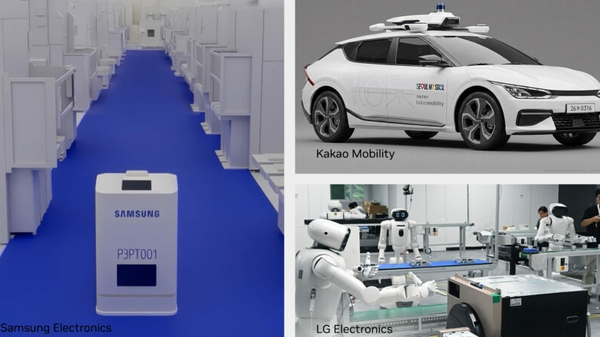
Samsung Electronics is expanding its work with NVIDIA across chip design and manufacturing, using accelerated computing and AI physics for materials research, process development and device engineering. In one case, an AI-assisted analysis that took about 18 hours on a 32-core CPU finished in 41 seconds on a GPU-accelerated setup — roughly 1,600 times faster. Selected quantum chemistry calculations on Samsung's sMOL platform have also run up to five times faster end to end with NVIDIA's tools.
Kakao Mobility plans to develop a level 4 autonomous driving system using NVIDIA's Hyperion reference platform, powered by DRIVE AGX Thor, alongside NVIDIA's Halos safety tools. The work combines Kakao Mobility's driving software and experience operating in Seoul's Gangnam district with NVIDIA's vehicle computing, starting with Kia purpose-built vehicles and aiming at future level 4 mobility services in Korea.
LG Electronics, meanwhile, has demonstrated robotic manipulation and manufacturing tasks powered by NVIDIA's Isaac GR00T models using its CLOiD robot in a live manufacturing environment. The project links real-world data collection, data augmentation, model training, onboard computing and simulation-based evaluation into a repeatable workflow for training and improving factory robots.
Together, the three efforts show physical AI moving from demos into day-to-day industrial use, with Korean manufacturers, mobility firms and robot makers all building on NVIDIA's computing platforms.
 NVIDIA's Independent Board Members Bring In Former U.S. Attorney Joon H. Kim to Run InvestigationNVIDIA · Tech
 NVIDIA, Rebellions and SK Telecom Join Forces on Korea's Sovereign AI InfrastructureNVIDIA · Tech
 NVIDIA's Open-Source Wireless Tools Pass 1 Million Downloads as 6G Research AcceleratesNVIDIA · Tech
 NVIDIA Hands OpenShell to the CNCF and Expands Its Open Source AI Infrastructure · Tech