OFFICIAL Written by GPN · Nov 9, 2026, 9:00 PM ET · Amazon Leo · Tech
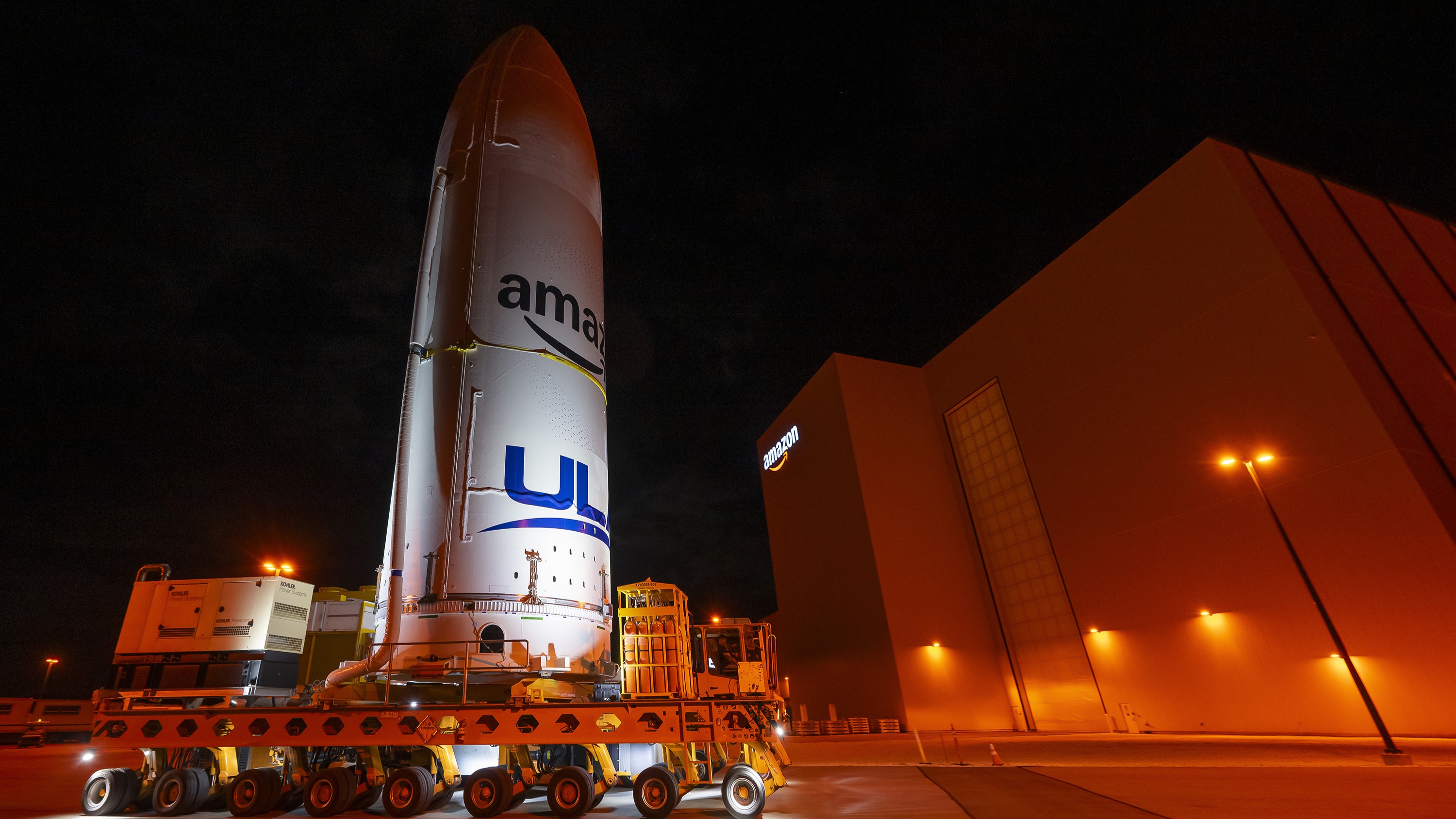
Amazon Leo's first mission aboard United Launch Alliance's Vulcan rocket is targeting liftoff on November 13, 2026, from Space Launch Complex 41 at Cape Canaveral Space Force Station. The mission, Leo Vulcan 1 (LV-01), will carry 40 satellites to low Earth orbit — the largest batch of Leo satellites flown yet.
Amazon completed its 1,000th satellite in early September, and the program now has hundreds of flight-ready satellites waiting for launch. Vulcan is Amazon's second heavy-lift vehicle to come online after Ariane 6, and the 38 contracted Vulcan launches will carry more than 1,500 first-generation Leo satellites — close to half the first-generation constellation, making Vulcan the program's primary workhorse over the next several years, according to Melissa Wuerl, director of launch systems for Amazon Leo.
The debut flight carries new hardware: it is the first to fly a shorter, optimized version of ULA's Centaur V upper stage, and the first to fly in Vulcan's six-booster configuration for maximum performance. It is also the first ULA mission to use Amazon-funded infrastructure at Cape Canaveral, including a dedicated vertical integration facility and a new mobile launch platform, which let ULA prepare two Vulcan missions at once and cut turnaround between launches to days or weeks. The second mission, LV-02, is already being prepared and is expected to launch within weeks of LV-01.
Looking further ahead, the next Arianespace mission, Leo Europe 4, is targeting no earlier than November 23 from Europe's Spaceport in Kourou, French Guiana. With more than 100 missions on the manifest, Amazon expects to expand service to more customers following an initial service rollout later this year.
 NVIDIA Hands OpenShell to the CNCF and Expands Its Open Source AI Infrastructure · Tech
 AWS Commits $100 Million in AI and Cloud Tech to Expand Health Services Worldwide · Tech
 Razer Unveils Honkai: Star Rail Collection Built Around Silver Wolf LV.999Honkai: Star Rail · Tech
 NVIDIA's Independent Board Members Bring In Former U.S. Attorney Joon H. Kim to Run InvestigationNVIDIA · Tech