
NVIDIA has expanded its CUDA-X libraries, adding cuPhoton, cuPotential and cuSpa, with the aim of giving researchers and AI agents faster ways to sift through vast amounts of scientific data.
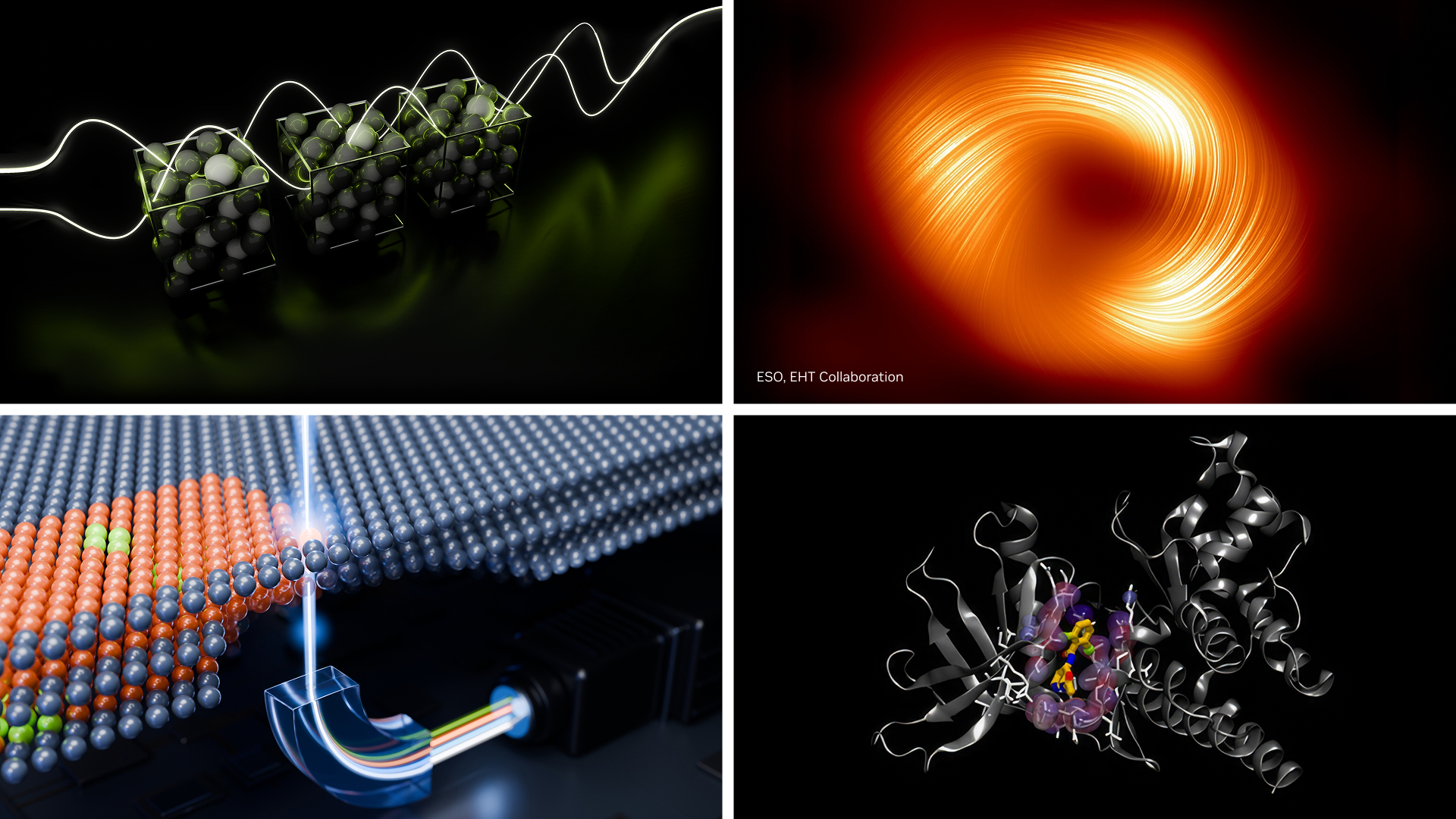
In astrophysics, the cuPhoton.xBeam module correlates observations from the Event Horizon Telescope orders of magnitude faster than before: analysis that once took more than a month now takes eight minutes, and the team correlated observations of black hole jets J1924 and 3C279, making it possible to reconstruct the Messier 87* black hole in real time. The pipeline runs on distributed multi-GPU systems or a compact DGX Spark system.
For fusion, Pacific Fusion researchers are using cuPhoton.xLens to pull insights from plasma simulations while they run, and can pair the pipeline with a Nemotron-powered agent running locally to steer simulations and inform reactor design. In drug discovery, cuPotential speeds up existing simulation software by up to three times, and companies including Cadence, Fathom Therapeutics, Topos Bio, Genesis Molecular AI and Terray Therapeutics are adopting it.
Materials research gets Daviator, a set of GPU kernels for the Vienna Ab initio Simulation Package coming to NVIDIA ALCHEMI, delivering quantum-mechanical calculations up to 22 times faster at up to 75% lower cost. In biology, the newly open source cuSpa speeds up cell polygon calculations 900 times over CPUs at Memorial Sloan Kettering, while a GPU-accelerated HMMER library ran benchmark searches up to 84 times faster at Basecamp Research.