
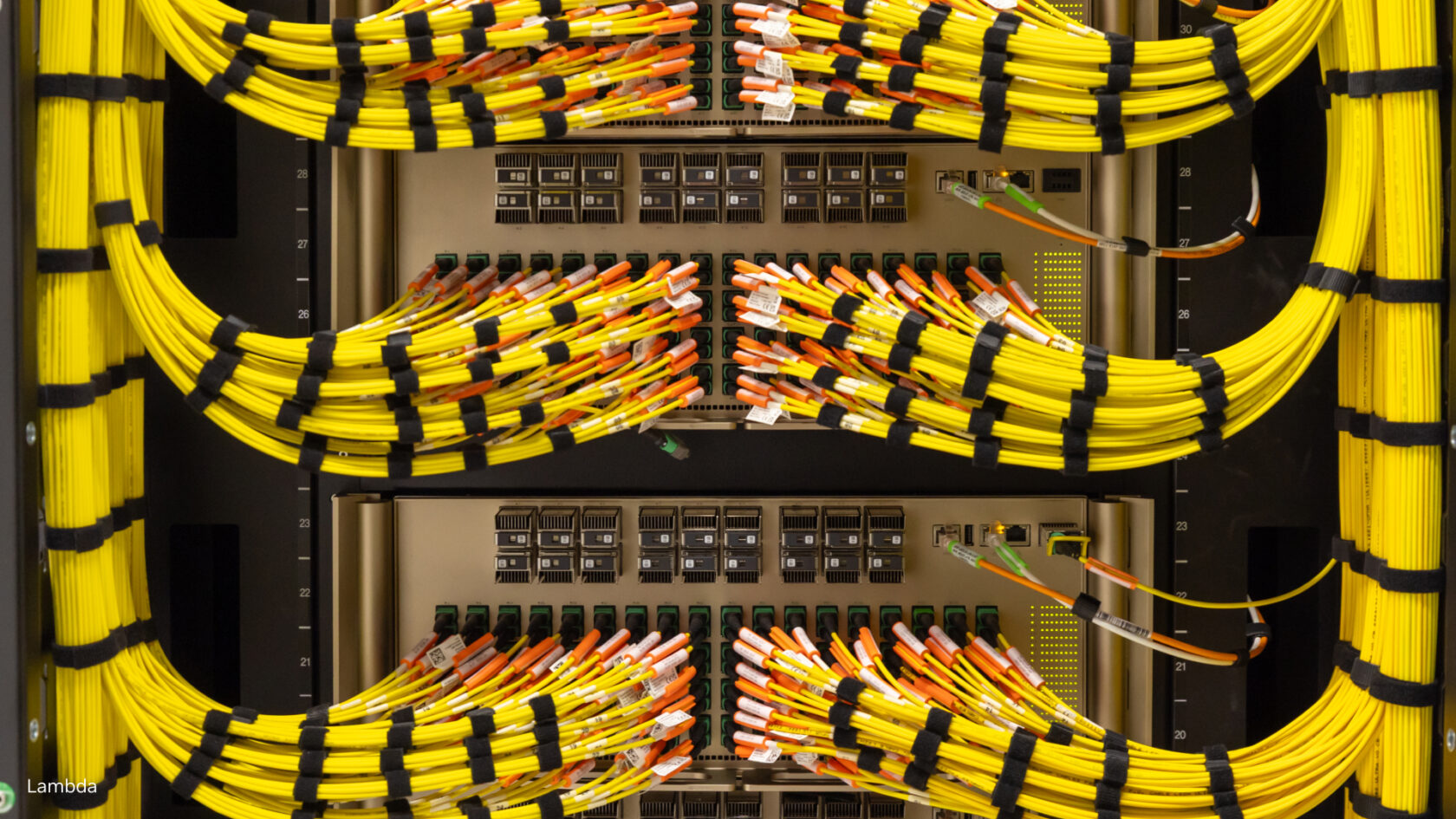
Training a modern AI model takes thousands of GPUs working together, and the network between them has to keep up. Cloud provider Lambda is tackling that part of the problem with NVIDIA Photonics co-packaged optics switches, using them to connect racks holding more than 10,000 GPUs.
The switches replace traditional pluggable transceivers with optical engines built directly onto the switch package. In Lambda's tests, that change cut network latency by about 4% at rack scale and by up to about 10% at pod scale, while holding the same throughput as conventional pluggable optics across rack, scalable-unit and pod setups.
Power and reliability are the other half of the story. NVIDIA says its Photonics switches deliver up to five times better power efficiency and up to 15 times higher reliability than conventional pluggable optics, while using four times fewer lasers. That matters because every watt spent moving data is a watt that cannot be spent on compute, and in a large training job a single interrupted link can stall thousands of GPUs.
Each switch in Lambda's deployment carries 144 ports running at 800 gigabits per second, with liquid cooling carrying heat away from the switch chip and the optical engines. For agentic inference workloads, where one network disruption can cascade into delays across many agents, the steadier link is as important as the raw speed.
NVIDIA frames the deployment as a step toward the infrastructure needed for the next generation of AI, with networking keeping pace as clusters keep growing. The announcement was published on the NVIDIA blog on November 16, 2026.