
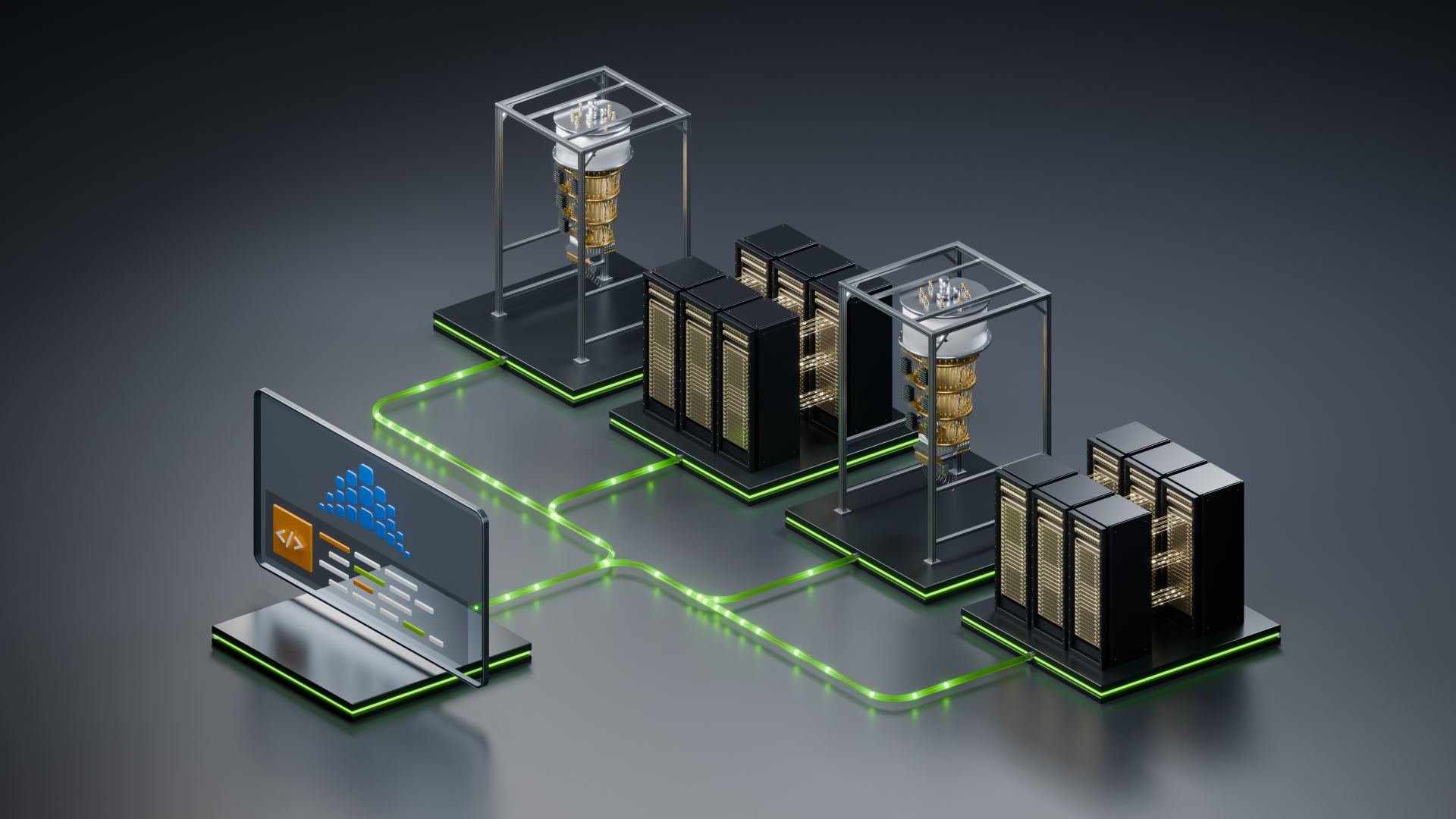
Quantum processors are moving into supercomputing centers, and the software that schedules work on those machines is catching up. NVIDIA has expanded the community-built Slurm workload manager so it can coordinate quantum processors alongside CPUs and GPUs.
The shift follows fast growth in quantum hardware at supercomputing sites. NVIDIA says quantum processor deployments at supercomputing centers have grown nearly sevenfold over the past five years, with nearly 30 centers now deploying more than 50 quantum processors between them.
Until now, plugging a quantum processor into a supercomputing center meant solving the software problem from scratch for each new machine. The new Slurm release lets quantum hardware builders create a single interface to their hardware for every center through a simple file, building on existing quantum-HPC interfaces such as QRMI and QDMI so integrations can be reused across deployments.
Scientists can now run hybrid quantum-classical applications built with platforms such as NVIDIA CUDA-Q, with Slurm coordinating access to all the processing they need. The expansion adds a community-developed orchestration layer to NVIDIA's open platform for quantum-GPU supercomputing.
The wider platform updates shown at SC26 include a new TCBP-JOBS decoder that NVIDIA says runs 13,000 times faster than the industry standard, and expanded fault-tolerant primitives for compiling quantum applications. Fermilab has already used CUDA-Q to complete studies in three weeks that would normally have taken five months. The announcement was published on the NVIDIA blog on November 16, 2026.