Google has spotlighted five community projects built with Gemini 4 Carbon, its model built for tasks that push the limits of a model's intelligence — and the results range from simulated physics to a rebuilt 19th-century laboratory.
Since Carbon rolled out more broadly last week, Google says builders have leaned into the model's ability to explore thoroughly, reason deeply and run extended verification loops. Here are the five projects it picked out.
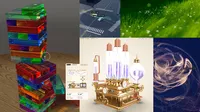
Glitter Gal coded a meadow of 52,000 wildflowers and grass blades from scratch in CUDA and C++ with Carbon, synthesising the wind to match every gust. Chubby pushed further into simulation, using Carbon to model 1,048,576 glowing particles swirling like live tidal currents in real time with WebGPU.
Andrew V wondered what a block-stacking game would feel like if every piece were made of fragile stained glass. Carbon simulated how the tower catches the light, rings when tapped and shatters into shards when it falls.
Giyu_codes went looking for underserved industries buried in messy public records, pairing with Carbon to turn scattered public datasets into 14 interactive tools with live 3D visuals.
And The Bugged Dev started from a single reference image and brought a 19th-century Parisian optics lab to life with Carbon, complete with 92 brass and glass instruments that can actually be tested and tuned.
Developers can build with Carbon through the Gemini API paid tier in Google AI Studio and Android Studio. Google AI Ultra subscribers can try it in Antigravity, AI Studio, the Gemini app and AI Mode in Search, while Gemini for Business users can access it via the API or model dropdown, Antigravity or CodeMender.