
Google's orbiting TPU answers back in Project Suncatcher's first Hello World
OFFICIAL Written by GPN · Nov 3, 2026, 12:29 AM ET · Project Suncatcher · Tech
Google's experiment to run AI compute in space has passed its first milestone. The company launched its Project Suncatcher prototype satellite on October 1, and after weeks of commissioning work, including powering up the host and TPU trays and running early machine learning tests, it has now received the first AI response from a data-centre-class TPU in orbit. The test itself was deliberately simple. During a ground-station pass, Google sent its first prompt to the onboard Gemma 4 open model, asking it to write a haiku about being in space. As the satellite passed Svalbard, Norway, the downlinked poem confirmed success: "Blue marble below / Data streams in silent grace / Starlight feeds my core." Google has since tested space-themed limericks and telemetry prompts reporting the technical status of the payload systems. The next phase will test how its TPUs perform under thermal stress and radiation exposure in orbit, to check they can reliably run workloads in space. If those tests hold up, the path leads to the project's next milestone: twin interconnected satellites in 2027, on what Google calls a long road for its cosmic moonshot.
Facts gathered from
 Razer Mako X speakers bring End of Abyss sound and light to the deskEnd of Abyss · Tech
 Razer dresses its gear in Evangelion EVA-01 purple and greenEvangelion · Tech
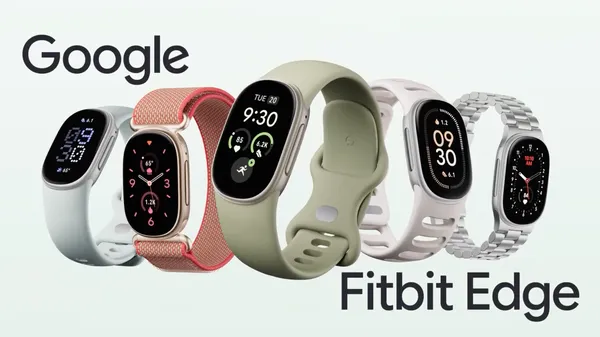 Google Fitbit Edge fitness tracker hits shelvesGoogle Fitbit Edge · Tech
 PlayStation reveals transparent Prism Collection for PS5 controllers and coversPlayStation 5 · Tech