OFFICIAL Written by GPN · Nov 13, 2026, 6:55 PM ET · · AI
NVIDIA has published a new look at how hospitals and health startups are putting AI to work, from matching patients to clinical trials to supporting radiologists and hospital teams, with clinicians staying in charge of every decision.
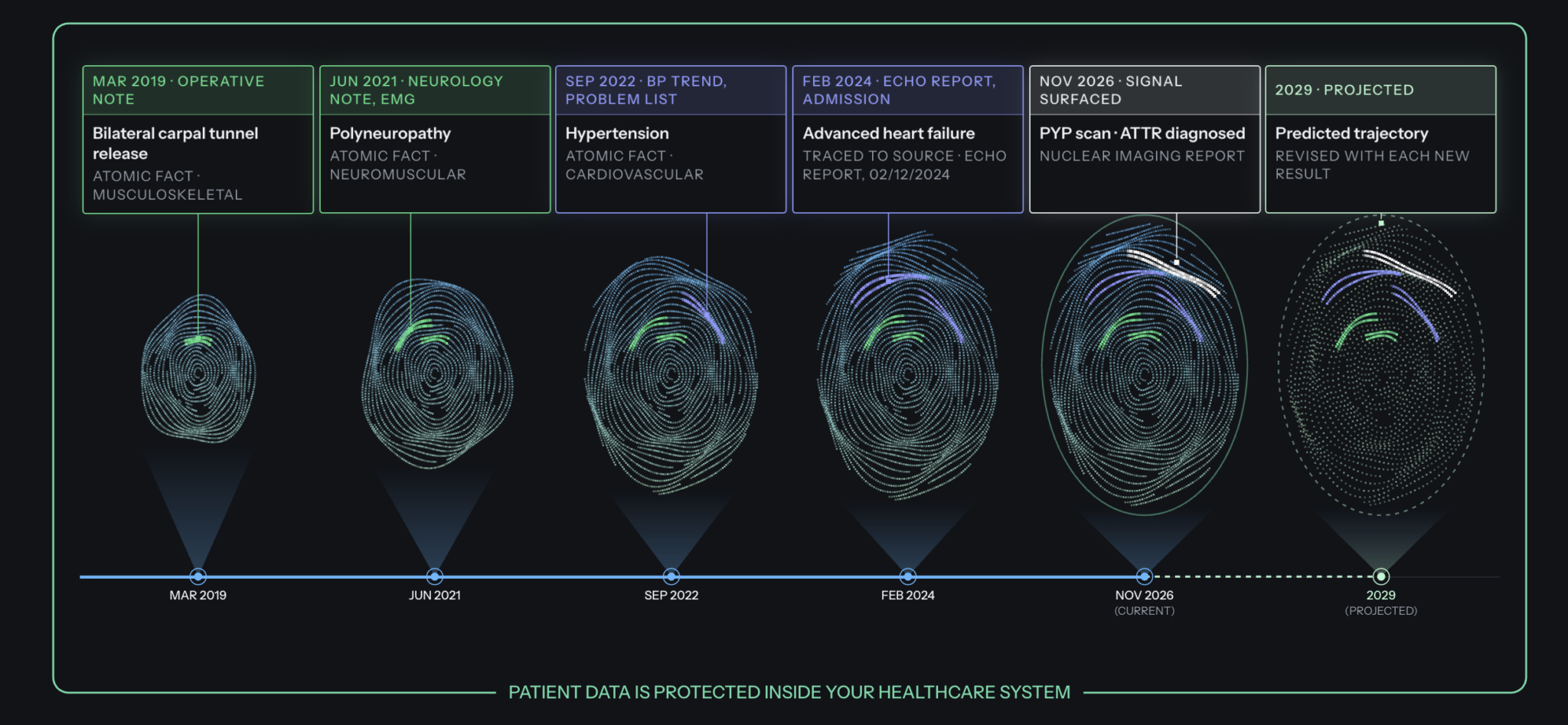
The post centres on Dyania Health, a New Jersey-based clinical AI company whose Synapsis AI engine reads across a patient's full record, including physicians' notes, operative reports, imaging and pathology reads and discharge summaries, to surface clinical signals that are traceable to their source. The system runs on NVIDIA-accelerated computing inside a health system's own firewall, so patient data never leaves the hospital.
Cleveland Clinic used the platform to support a study of more than 7,800 aortic valve replacement patients treated between 2005 and 2021. Synapsis AI reasoned across each record, including every echocardiogram added after surgery, to build a predictive model of valve deterioration and reintervention risk at three, five and ten years after surgery, completing chart review across the full group that NVIDIA says would have taken clinicians years by hand.
Dr. Lars Svensson, chief of the Heart, Vascular and Thoracic Institute at Cleveland Clinic, said using technology to bring together and analyse information that can help predict how long implanted heart valves last is a promising step towards better outcomes and more personalised care.
Dyania builds and trains its clinical models with NVIDIA NeMo open libraries, then optimises them with NVIDIA TensorRT and TensorRT-LLM to run on the hospital's own GPU servers. NVIDIA says the same approach can be applied to other challenges where the answer sits inside the medical record, such as finding patients eligible for clinical trials, closing care gaps in cardiology and oncology, and populating clinical registries.
 OpenAI Brings Computer-Use Agents and 20+ Plugins to ChatGPT for HealthcareOpenAI · AI
 OpenAI Opens a Science Blog to Show How Researchers Are Putting AI to WorkOpenAI · AI
 OpenAI Gives £1 Million to The King's Trust to Teach AI Skills to 25,000 Young PeopleOpenAI · AI
 ChatGPT Will Now Surface Les Echos and Le Parisien Stories Under New OpenAI–LVMH DealOpenAI · AI