OFFICIAL Written by GPN · Nov 16, 2026, 9:05 AM ET · OpenAI · AI
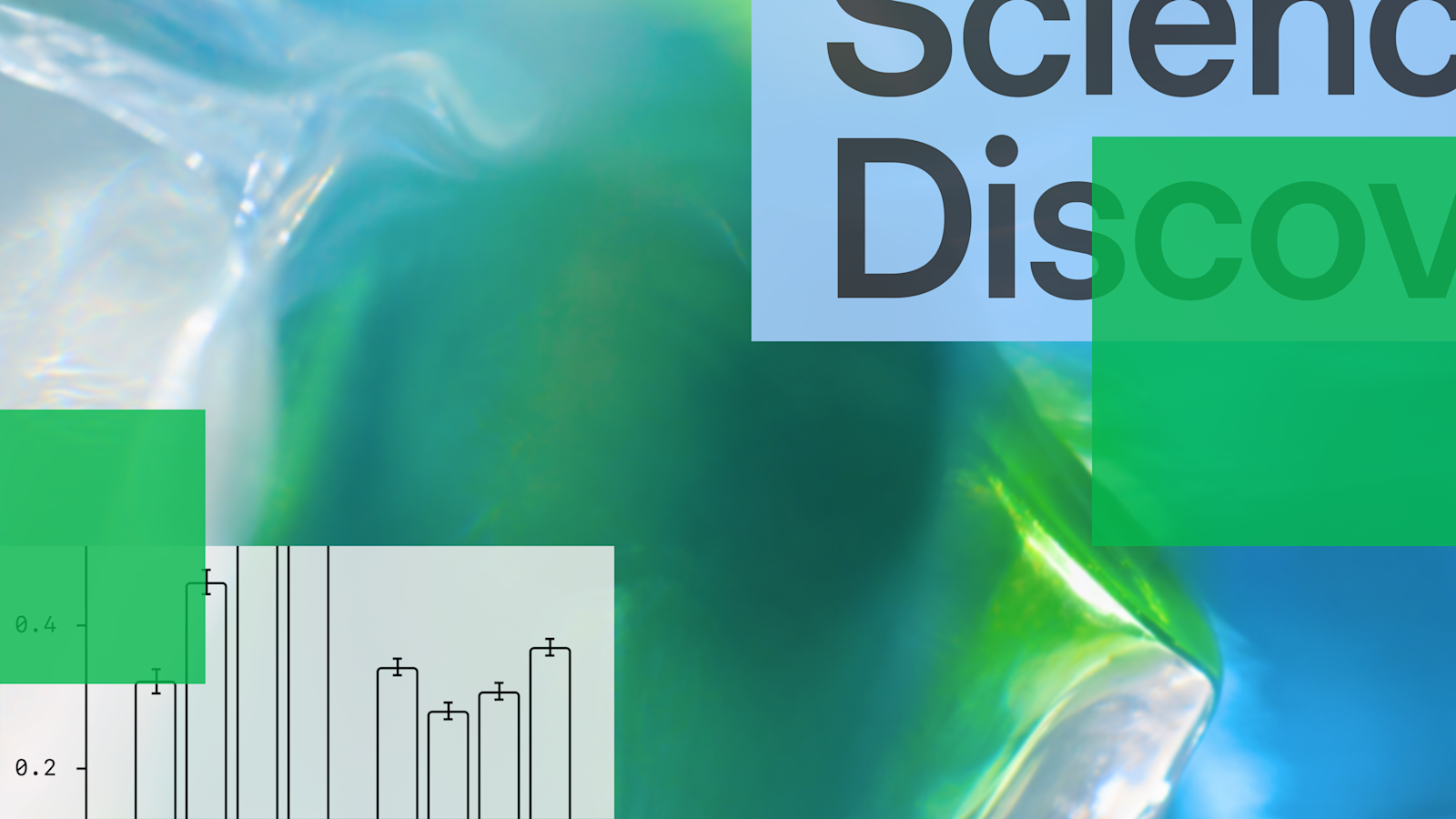
OpenAI has started a science blog to give scientists and academic researchers a place to share what they are discovering with AI — and how they are doing it. The blog will cover research and discoveries, methods and practical guidance, and firsthand accounts from researchers.
The launch follows a run of scientific results produced with OpenAI's models. In September, an internal OpenAI system produced a proof addressing the Navier–Stokes existence and smoothness problem, a longstanding question about the equations that describe fluid motion. In early October, the company released a broad set of mathematical results, including a result on the quasi-Riemann hypothesis that tightens the bound on the error in a classical formula for estimating how many primes sit below a given number.
Later in October came results across mathematics, computer science and physics, covering how waves concentrate, the limits of efficient computation and the mathematical foundations of interacting quantum field theory.
Biology features too. Working with PerturbAI and Scripps Research, thousands of agents powered by GPT-Rosalind analysed existing experimental data from millions of mouse brain cells in 32 minutes, connecting the effects of gene disruptions with scientific literature to point to biological mechanisms for scientists to test. Elsewhere, César de la Fuente's team is using ChatGPT and Codex to build algorithms that identify potential antibiotic molecules, which the team then makes and tests in the lab.
OpenAI says the blog will also tackle the open questions these tools raise: how machine-generated proofs get checked and explained, how to choose between the many hypotheses AI can generate in experimental science, and what the tools mean for training, attribution and the skills scientific work requires. The company says accelerating scientific discovery is one of the most impactful ways to work toward its mission of ensuring AGI benefits all of humanity.
 OpenAI Brings Computer-Use Agents and 20+ Plugins to ChatGPT for HealthcareOpenAI · AI
 OpenAI Gives £1 Million to The King's Trust to Teach AI Skills to 25,000 Young PeopleOpenAI · AI
 ChatGPT Will Now Surface Les Echos and Le Parisien Stories Under New OpenAI–LVMH DealOpenAI · AI
 GPT-6 Astra Helped a Physicist Take a Step Toward Defining the Standard Model on a LatticeOpenAI · AI